Your cart is empty
Your cart is currently empty. Let us assist you in finding the right product.
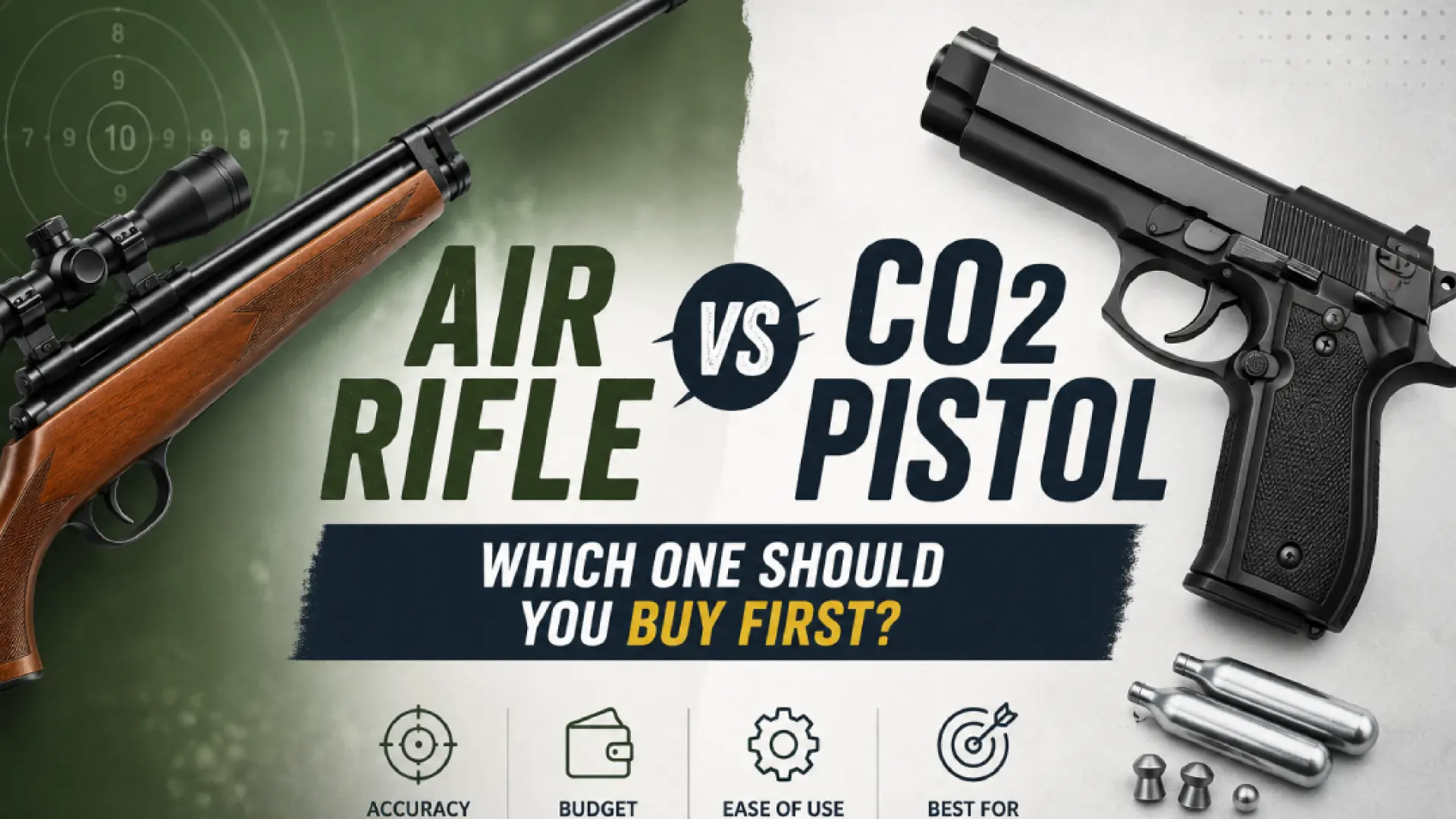
There's a moment every first-time airgun buyer goes through.
You've done enough research to know you want a .177 calibre airgun. You know it's legal. You know AirgunPro ships across India. You're ready to pull the trigger, figuratively speaking.
And then you land on the shop page and see two completely different worlds staring back at you.
On one side: air rifles. Long, precise, serious-looking. The kind of thing you imagine at a shooting range, mounted on a rest, zeroed in on a target 25 metres away.
On the other: CO2 pistols. Compact, sleek, and honestly pretty cool-looking. The kind of thing that fits in one hand, loads in seconds, and looks like it means business.
Both fire .177 pellets. Both are legal in India. Both are made for target practice and sport shooting.
So which one do you buy first?
That's what this post is going to help you figure out not with vague generalities, but with the specific things that actually matter for someone buying their first airgun in India in 2025.
Before we get into comparisons, let's be clear about what these two types of airguns actually are because a lot of beginner content online muddles this up.
Air Rifles
An air rifle is a long-barrelled airgun designed for accuracy and consistency over distance. Most entry-to-mid-level air rifles in India are PCP (Pre-Charged Pneumatic) type, meaning they're powered by compressed air stored in an onboard cylinder, which you fill using a hand pump or a high-pressure compressor.
Air rifles like the SDB Panther Under-Lever, PP100 Harpy, or PP100 Chimera from AirgunPro fall into this category. They're built for precision with longer barrels for better pellet stabilisation, more consistent shot-to-shot energy, and the ability to be used with a scope for longer-range target shooting.
They take a little more setup. But the payoff in accuracy is real.
CO2 Pistols
A CO2 pistol is a compact, handgun-style airgun powered by small CO2 cartridges the same 12g canisters you might have seen used in soda siphons. You slot one in, and it gives you a set number of shots before the gas runs out and you swap in a fresh cartridge.
CO2 pistols are fast, easy, and satisfying to use. No pumping, no filling, no setup. Load your magazine, pierce the CO2 cartridge, and you're shooting in under a minute.
The tradeoff is that CO2 pressure is affected by temperature and depletes shot-by-shot, which means your last few shots from a cartridge won't be quite as consistent as your first. More on that in a moment.
1. Accuracy
This is the most important factor for most buyers, and here, air rifles have a clear edge.
A longer barrel means the pellet has more time to stabilise before it exits the gun. Combined with the consistent air pressure of a PCP system, this gives air rifles noticeably better accuracy, especially at distances beyond 10 metres.
If you're serious about improving your shooting, practising for competition, or just want tight groupings on paper targets, an air rifle will reward your effort more consistently.
CO2 pistols are accurate; plenty of shooters practice seriously with them, but they're designed for shorter distances (typically 10 metres or less), and the inherent variability of CO2 pressure means you'll occasionally get a flyer that a rifle wouldn't produce.
2. Ease of Use
This is where CO2 pistols shine.
There's virtually no learning curve. No pump. No fill station. You insert a CO2 cartridge, load your pellet magazine, and you're shooting. The whole process takes about 90 seconds the first time, and under 30 seconds once you've done it a couple of times.
For someone who just wants to set up a target, shoot for half an hour, and pack up without any fuss a CO2 pistol is genuinely more enjoyable out of the box.
Air rifles, especially PCP types, require you to manage your air fill. You'll either use a hand pump (slower, but no ongoing cost) or a dedicated compressor. It's not complicated once you know what you're doing, but there is a small learning curve, and you need to be mindful of your fill pressure.
3. Cost - Initial and Ongoing
Initial purchase cost is broadly similar at the entry level. AirgunPro's range gives you a clear picture:
CO2 Pistols - entry-level options start below ₹10,000
So if the budget is tight, a CO2 pistol may be the more accessible starting point.
But ongoing costs are worth thinking about carefully.
CO2 cartridges are consumables. A 12g CO2 cartridge typically gives you 40–80 shots depending on the pistol and temperature. If you shoot 200 rounds in a session, you're going through 3–5 cartridges. Over time, this adds up.
Air rifles run on compressed air. Once you have a hand pump or compressor, your per-shot running cost is essentially the cost of your pellets which is very low.
So: CO2 pistols are cheaper to start with, but more expensive to run. Air rifles cost more upfront but are far more economical in the long run.
4. Fun Factor and Shooting Feel
This is subjective, but it genuinely matters, especially when you're deciding which hobby you'll actually stick with.
CO2 pistols are fun. There's something about holding a compact, well-balanced pistol, adopting a proper two-handed stance, and hitting a tin can at 7 metres that feels very satisfying. It's immediate, it's tactile, and it's great for close-range reactive shooting where you're engaging multiple targets quickly.
Air rifles are a different kind of fun. They're about discipline, breath control, trigger squeeze, and watching your groups tighten over weeks of practice. The satisfaction is slower-building, but deeper. When you finally put five shots through the same hole at 15 metres, it feels earned.
Both are genuinely enjoyable. But they appeal to slightly different personalities.
CO2 pistol: You like fast, intuitive, responsive shooting. You want to pick it up and have fun immediately.
Air rifle: You're drawn to the process of improving. You like the idea of learning a skill and getting progressively better at it.
5. Space Required
A practical consideration that most guides ignore.
CO2 pistols are compact. You can comfortably shoot indoors at 5–7 metres with a basic pellet trap. Even a small bedroom or study works fine. They're quiet enough that neighbours in adjacent flats generally won't be disturbed.
Air rifles need more space. While 10 metres is the standard for competitive shooting, even practising at 10 metres requires a reasonably long room or an outdoor terrace/garden. If you're in a compact urban flat, this can be a genuine constraint.
6. Scope and Upgrades
If you're the type who enjoys tinkering, upgrading, and building toward something, air rifles offer a much richer upgrade path.
You can mount scopes (AirgunPro carries a full range from Discovery and Element Helix), upgrade your pellets as your shooting improves, add a bipod for bench rest practice, experiment with different pressure levels, and eventually move toward competitive shooting if that appeals to you.
CO2 pistols are more standalone. Some accept red dot sights, and you can add grips or sight adjustments, but the upgrade path is shorter.
The Temperature Problem with CO2 Something Nobody Tells You
If you live anywhere in India that gets cold in winter and that includes most of North and Central India, there's one CO2 pistol quirk worth knowing about.
CO2 gas pressure is directly affected by temperature. In cold weather (below 15°C), the gas pressure drops noticeably, and your pistol will shoot weaker and less consistently. On a cold January morning in Delhi or Jaipur, a CO2 pistol that performs beautifully in summer may leave you frustrated.
Air rifles using compressed air are unaffected by temperature. Fill your tank in January and it shoots exactly the same as it does in May.
This doesn't make CO2 pistols bad it just means if you plan to shoot year-round, especially in Northern India, it's worth factoring in.
Here's the honest answer, based on who you are:
Buy a CO2 Pistol if:
Buy an Air Rifle if:
Can't decide? Here's a practical suggestion.
If you're genuinely torn start with a CO2 pistol. They're easier, cheaper, and a great way to find out whether you actually enjoy shooting before committing to the higher investment of a quality air rifle. If you find yourself craving more distance, more precision, and more depth, you'll know it's time to step up to a rifle.
A lot of serious Indian air rifle shooters started with a CO2 pistol. It's not a lesser path it's just a different starting point.
Air Rifles Worth Considering
SDB Panther Under-Lever Air Rifle - ₹17,000 A solid entry point. Under-lever action, .177 calibre, reliable build quality. Great for someone who wants a proper air rifle without stretching to the premium tier.
PP100 Harpy X3 - ₹27,000 AirgunPro's mid-range PCP rifle. Noticeably better accuracy and shot-to-shot consistency compared to entry-level options. A popular choice for buyers who want to start right without going all the way to flagship territory.
PP100 Chimera B-X3 - ₹36,000 The step-up from the Harpy. Better build, finer adjustments, and more consistent performance across a longer session. For buyers who are committed to serious target practice.
PX100 Achilles / PX120 Minotaur - ₹32,000–₹49,000 AirgunPro's premium range. If you already know you're serious about the hobby, this is where you'll end up eventually. Might as well start here.
CO2 Pistols
AirgunPro's CO2 pistol range offers compact, reliable options in .177 calibre, ideal for indoor target practice at home. All models use standard 12g CO2 cartridges that are widely available across India.
→ Browse the full CO2 Pistol range → Browse all Air Rifles
Q: Is a CO2 pistol good for beginners in India? Absolutely. CO2 pistols are one of the most beginner-friendly airguns available. Minimal setup, compact size, and an intuitive shooting experience make them a great entry point for first-time buyers.
Q: Are air rifles more accurate than CO2 pistols? Generally, yes, especially at distances beyond 10 metres. The longer barrel and consistent air pressure of a PCP air rifle produce tighter groupings than a CO2 pistol can achieve at range.
Q: Which is cheaper to run an air rifle or a CO2 pistol? Air rifles are significantly cheaper to run long-term. Once you have a hand pump or compressor, your cost is just the pellets. CO2 pistols require ongoing cartridge purchases, which add up over time.
Q: Can I use a CO2 pistol indoors at home? Yes. CO2 pistols are compact and quiet, making them well-suited to indoor use with a proper pellet trap. They're a practical option for anyone with limited space.
Q: Which airgun is better for competitive shooting in India? Air rifles, specifically PCP rifles, are the standard for competitive shooting. Olympic-format 10m Air Rifle events use precision air rifles. If competitive shooting is your goal, a good PCP rifle is where you'll end up.
Q: Do CO2 pistols work in cold weather in India? CO2 performance drops in cold temperatures. In winter months in North India (below 15°C), you may notice reduced power and consistency. Air rifles using compressed air are not affected by temperature.
Q: What's a good first air rifle for someone with a ₹15,000–₹20,000 budget? The SDB Panther Under-Lever Air Rifle at ₹17,000 is an excellent starting point. Good build quality, proper .177 calibre performance, and a natural step-up from CO2 shooting.
There's no universally right answer here, and anyone who tells you there is hasn't thought carefully about the question.
CO2 pistols are for people who want to start shooting today, with minimum fuss, in a small space, and see how they feel about the hobby before committing more.
Air rifles are for people who are ready to invest in a skill, want the satisfaction of watching their accuracy improve over months of practice, and have the space and patience to do it right.
Both are valid. Both are enjoyable. And both are the kind of hobby that, once it gets its hooks into you, tends to stick around for a long time.
Whatever you choose, buy genuine, buy from a registered retailer, and keep your purchase invoice safe.
Happy shooting.
Not sure which specific model is right for you? Browse the full AirgunPro collection → or reach out to our team, we're happy to help you choose based on your space, budget, and goals.
Discover more stories and style tips to keep your inspiration flowing.
19 June
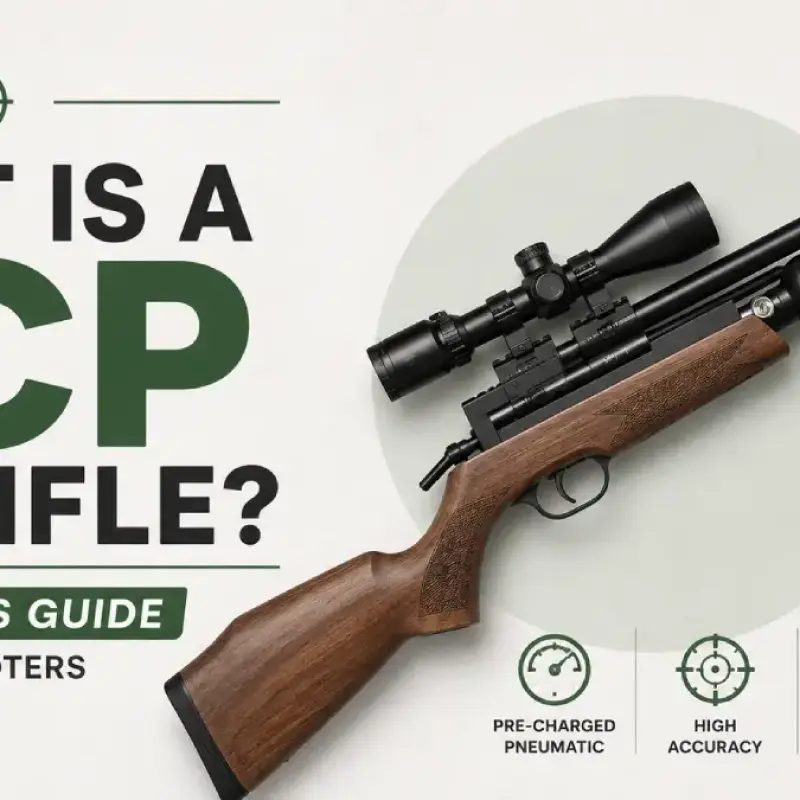
Never heard of PCP air rifles before? This plain-English beginner's guide explains exactly what PCP means, how it works, why serious shooters prefer it, and which PCP air rifle to start with in India.
28 May
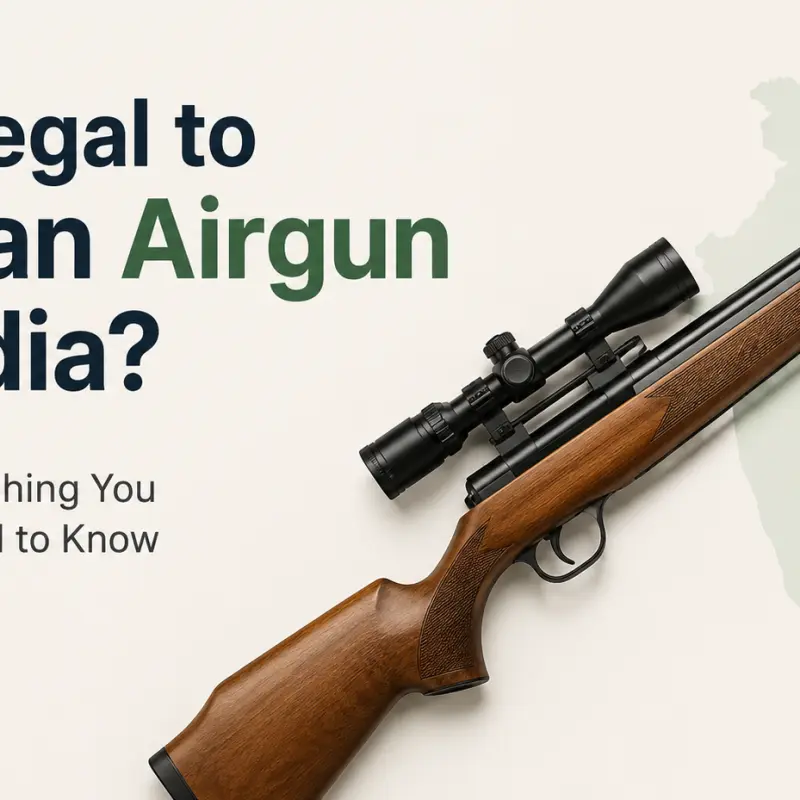
Confused about airgun laws in India? Learn exactly which airguns are legal, what the Arms Rules 2016 say, whether you need a license, and how to buy safely online. Complete 2026 guide.
Buy ₹100 more to get free shipping
Your cart is currently empty. Let us assist you in finding the right product.